The Complete Indoor Gazania Guide: How Grow Lights Help This "Treasure Flower" Thrive in Your Home
Gazania — often called the “Treasure Flower” — gets its name from those gorgeous medal-like patterns and bold, vibrant colors. As a true sun-lover, it puts on its best show under direct sunlight. But if you’re growing indoors, the lack of strong light is probably the biggest wall between you and those brilliant blooms. This Q&A-style guide breaks down everything you need to know, and explains why good grow lights are basically the secret sauce to turning your home into a blooming sanctuary.
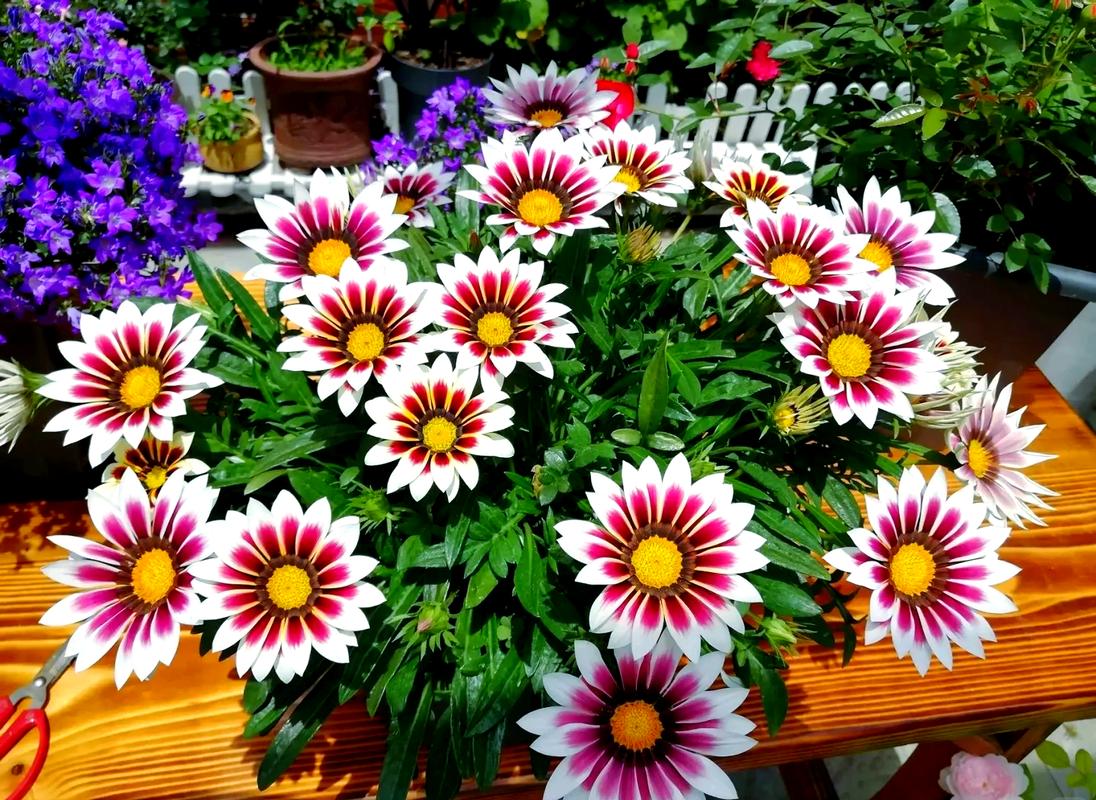
What do Gazanias really need to survive indoors?
Indoor Gazania care comes down to three simple things: well-draining soil, smart watering, and consistent feeding.
Soil and Pots
These guys hate wet feet. Use a loose, airy mix — something like peat moss blended with perlite works great — and make sure your pot has proper drainage holes. A layer of pebbles or clay pellets at the bottom helps too.
Watering
Follow the “soak and dry” rule. Wait until the soil is completely dry, then water thoroughly. Empty the saucer right after — standing water is a death sentence. And here’s a tip: try not to splash water on the leaves or the center of the plant, or rot can creep in.
Fertilizing
During the growing season, feed every 10 to 15 days with a balanced fertilizer. Once you see buds forming, switch to something higher in phosphorus and potassium to push those flowers. When the plant is in full bloom, just pause the feeding and let it do its thing.
Why are grow lights a must-have for indoor Gazanias?
Here’s the thing a lot of people get wrong: they think putting a Gazania on a windowsill is enough. But regular glass actually filters out a ton of the red and blue light wavelengths that plants need for photosynthesis. Even on a bright windowsill, winter light intensity can be as low as 10 to 20 percent of what the plant would get outside in direct sun.
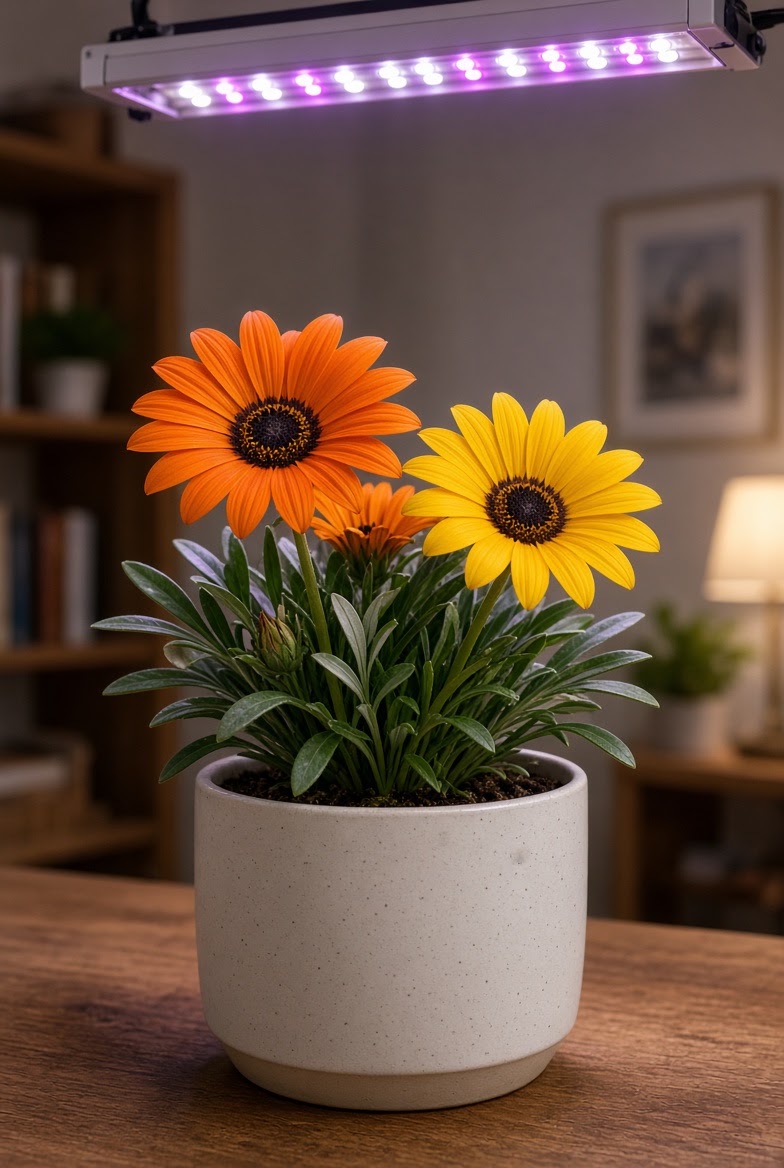
Gazanias are “light-sensitive” flowers. In nature, they photosynthesize like crazy, and when light is low, things go downhill fast:
Leggy growth — Without enough light, the plant stretches toward whatever source it can find, getting weak and sparse instead of staying compact and lush.
The “closed bud” curse — Gazania blooms open and close based on light intensity. If your indoor light is too dim, the buds might never fully open — or they stay shut even during the day.
Mimicking the outdoors — Most apartments just can’t give these plants the 6-plus hours of direct sun they crave.
That’s where grow lights come in, and here’s what they actually do:
- Extend the light window — With a simple timer, you can easily give your Gazania 12 to 16 hours of light per day.
- Deliver the right spectrum — Full-spectrum LEDs mimic natural sunlight, balancing red and blue wavelengths to fuel photosynthesis and flower production.
- Beat the seasons — Short winter days and endless cloudy spells? No problem. Grow lights are the only reliable way to keep your Gazania blooming through the darker months.
How do I choose the right grow light for Gazanias?
Go with full-spectrum LED grow lights. They cast a light that looks close to natural white — good for the plant, easy on the eyes, and perfectly fine for a living room setup. If you’re wondering how many watts you actually need, a single Gazania plant typically needs 10–20W, while a small group of 2–3 pots works well with a 30–50W panel. Here’s what to look for:
| Parameter | Recommendation |
|---|---|
| Spectrum | Full spectrum, with peaks around 660nm (red) and 450nm (blue) |
| Intensity | At ~30cm (12") from the plant, aim for PPFD of 300–500 µmol/m²/s |
| Wattage | Single plant: 10–20W. Small group (2–3 pots): 30–50W panel or bar (see our 100W Quantum Board for larger setups) |
| Distance | 20–30cm (8–12") above the top of the plant |
Avoid regular incandescent bulbs (way too hot, terrible spectrum) and standard fluorescent tubes (not enough energy in the right wavelengths). If you can, pick lights with a higher red-to-blue ratio — they’re optimized for flowering plants. For a deeper dive into why blue and UV wavelengths matter, check out our spectral guides.
How do I set up and use grow lights the right way?
Getting the setup right is half the battle.
Placement
Hang the light directly above the plant, pointed straight down, so the light spreads evenly across the whole canopy. If you’re using bar-style lights, line them up in parallel for wider coverage.
Duration
Get a smart timer plug — seriously, it’s a game-changer. Set it to turn on and off at the same time every day to mimic natural day-night cycles. And don’t forget: plants need darkness too. The dark period is actually important for flower bud development. Here’s a rough guide by season:
| Season | Daily Light Hours | Notes |
|---|---|---|
| Spring | 12–14h | Supplement on cloudy days to push blooms |
| Summer | 10–12h | Mostly for cloudy days or indoor-only setups |
| Fall | 12–14h | Natural light fades, ramp up the supplement |
| Winter | 14–16h | Grow lights become the main light source |
Adjusting the height
Start at 30cm (12") and watch how the plant responds. If leaf edges start browning or fading, the light is too strong — move it up a bit. If the plant looks leggy or the leaves are pale, it’s not getting enough — drop the light closer to 20cm (8").
Reading the plant
- Firm leaves, bright flowers, lots of blooms → you’re golden
- Soft, droopy leaves turning dark green → not enough light — extend the timing or lower the light
- Dried or bleached patches on leaf edges → too much light — raise the light or shorten the daily duration
How can I tell if my Gazania’s problems are light-related?
The plant will tell you — you just have to know what to look for.
- Signal 1: Leaves only, no flowers — This usually means the light intensity is too low. Your light might be underpowered or hung too high.
- Signal 2: Buds form but stay closed during the day — The light duration is too short. The plant hasn’t “woken up” yet. Try extending the hours.
- Signal 3: Yellowing or mushy leaves — This is almost always a watering or ventilation issue, not a light problem. Cut back on water and improve airflow.
Seasonal care at a glance
| Season | Light hours | Light strategy | Other care tips |
|---|---|---|---|
| Spring | 12h/day | Supplement on cloudy days to push blooms | Repot if needed, start phosphorus-potassium fertilizer |
| Summer | 10–12h/day | Shade from harsh midday sun if outdoors | Focus on airflow, watch watering to avoid rot |
| Fall | 12–14h/day | Natural light fades, ramp up the supplement | Prune spent flowers, let the plant store energy |
| Winter | 14–16h/day | Grow lights become the main light source | Cut way back on water, stop fertilizing, keep warm |
Think of a good grow light as giving your indoor garden a turbo boost. It doesn’t just fix the low-light problem — it lets you experience the Gazania’s beautiful daily rhythm firsthand: flowers opening wide when the lights come on in the morning, and gently closing up as they dim at night. That little dance with light is honestly one of the most rewarding parts of growing these plants indoors.
Ready to get started?
Browse our full range of LED grow lights or check out our 120W Spider LED — a popular choice for flowering plants like Gazanias that need both full spectrum and UV support.